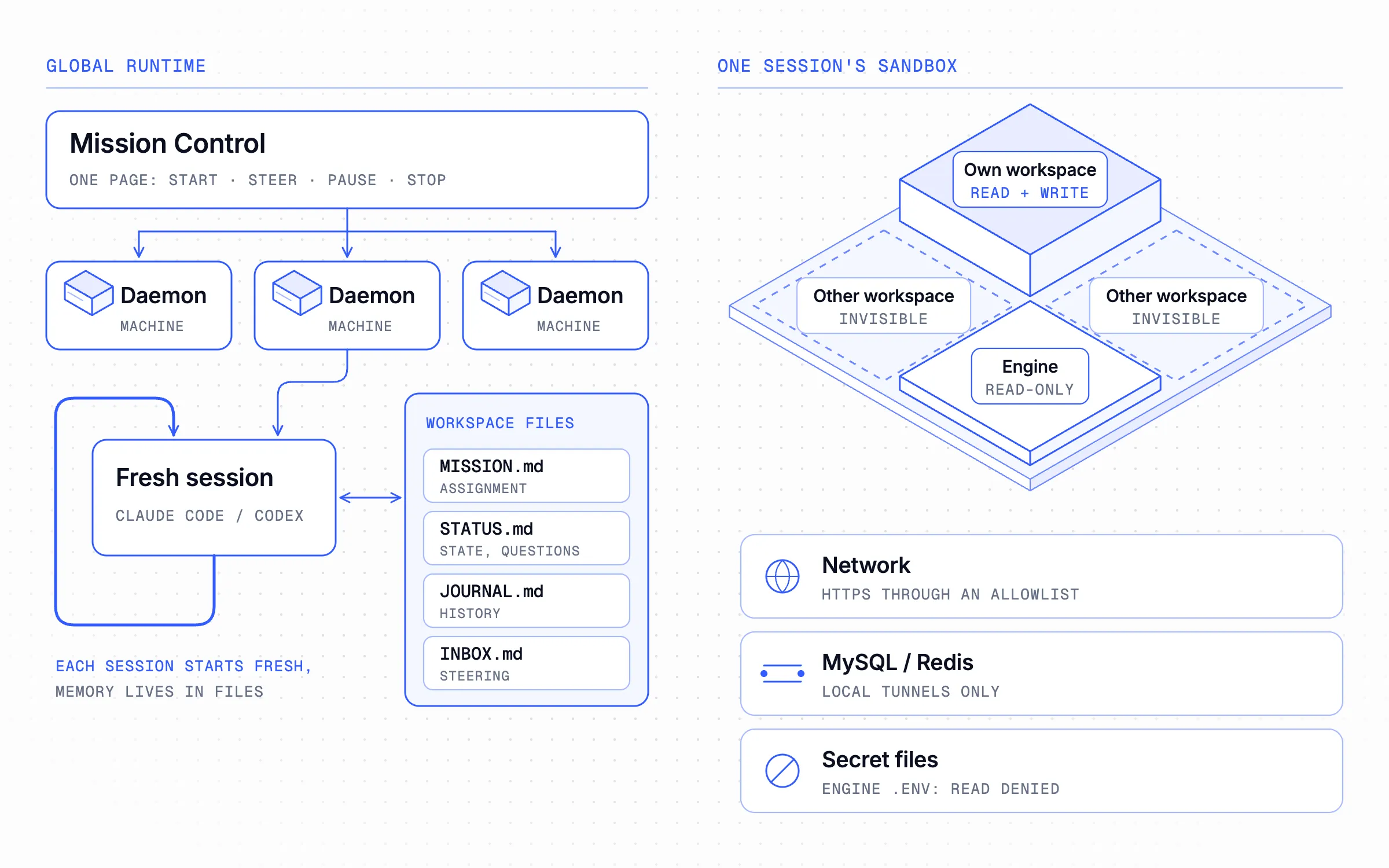
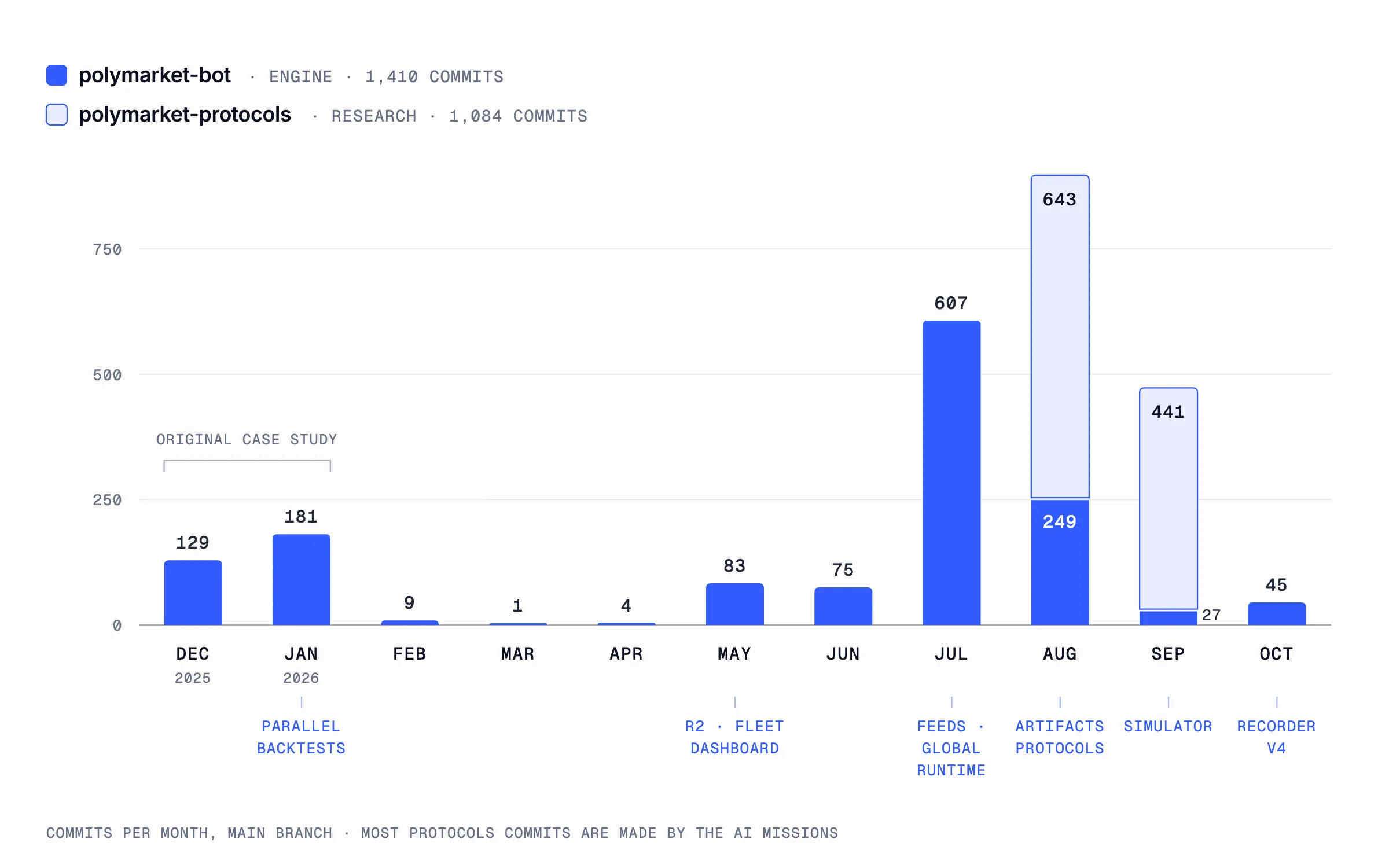
In July I added a Global Runtime to the engine: a daemon on each machine that runs long Claude Code or Codex missions as a series of fresh sessions. Missions keep their memory in files (MISSION, STATUS, JOURNAL, INBOX), and Mission Control, one dashboard page, starts, steers, pauses and stops them across the fleet.
In August I built polymarket-protocols, a separate repo of sandboxed research workspaces on top of it. I designed and built the system alone; the AI missions it runs made most of its 1,084 commits.
- Sandbox per session: each session can write only to its own workspace; other workspaces are invisible, the engine is read-only, network is HTTPS through an allowlist, databases are reached only through local tunnels and secret files are blocked.
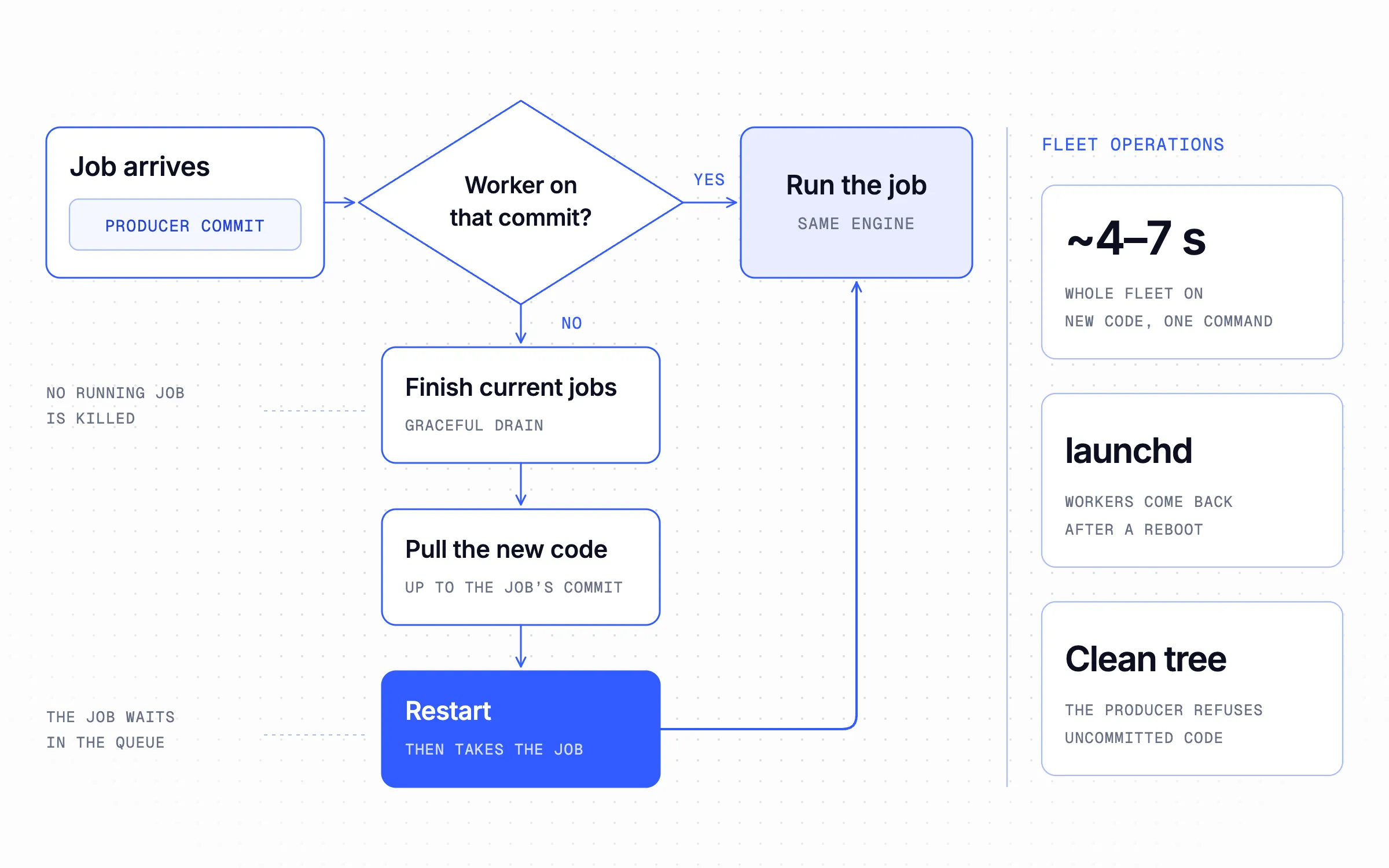
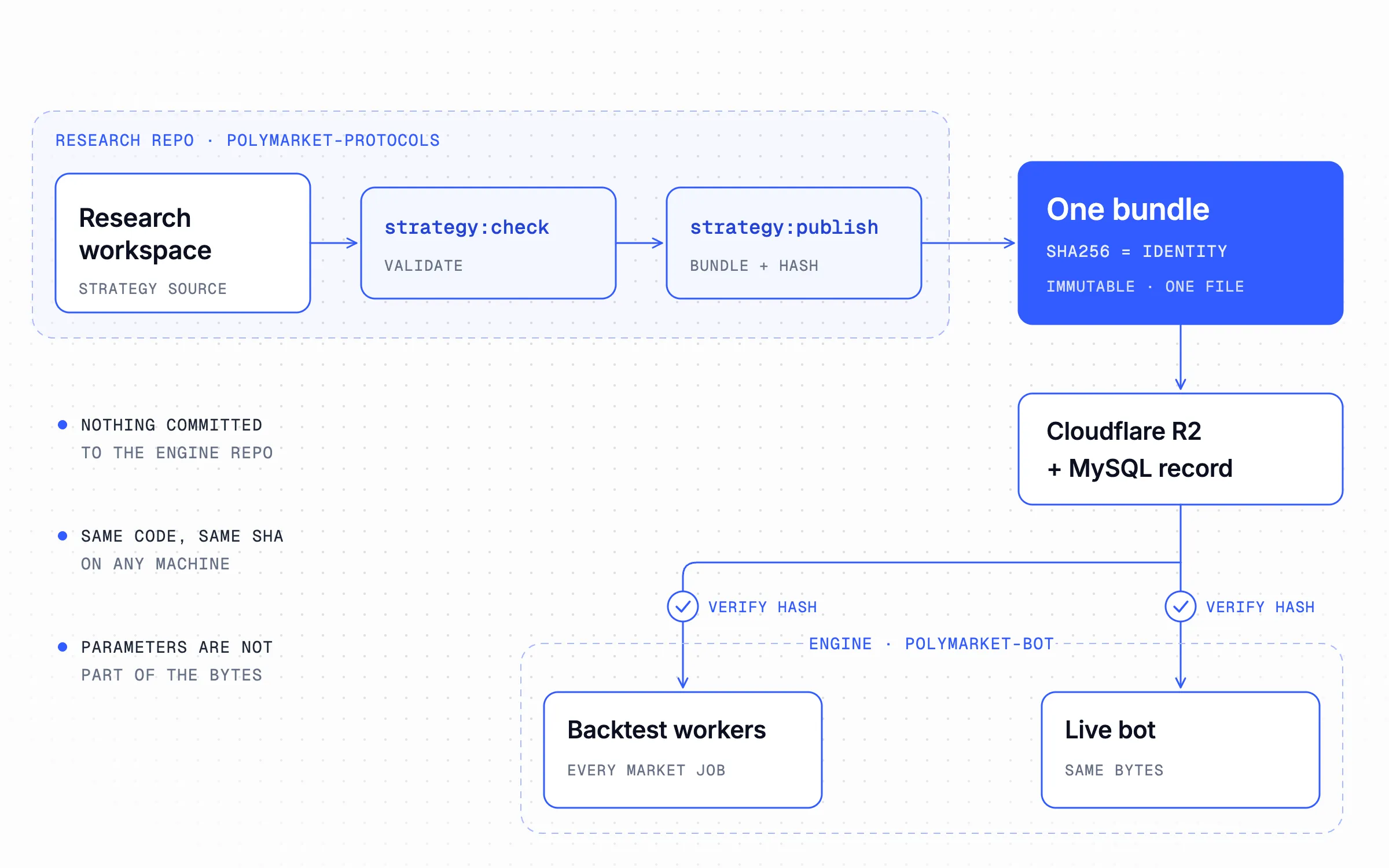
- Hashed artifacts: research code reaches the engine only as one bundle identified by its sha256, checked by every backtest worker and by the live bot before it runs.
- One owner per workspace: each workspace belongs to one machine, a pre-commit hook rejects changes to anyone else's, and sessions push straight to main, so git log is the activity feed of the whole fleet. A workspace moves only if the shared database shows no live run for it.
- Two models, one task: the same research game is played side by side by a Claude and a Codex mission, with a dashboard to compare them and send guidance.
- Engine knowledge: a shared, source-backed knowledge base about the engine (42 topics, 105 claims), with freshness checks that flag it for review when engine code changes.
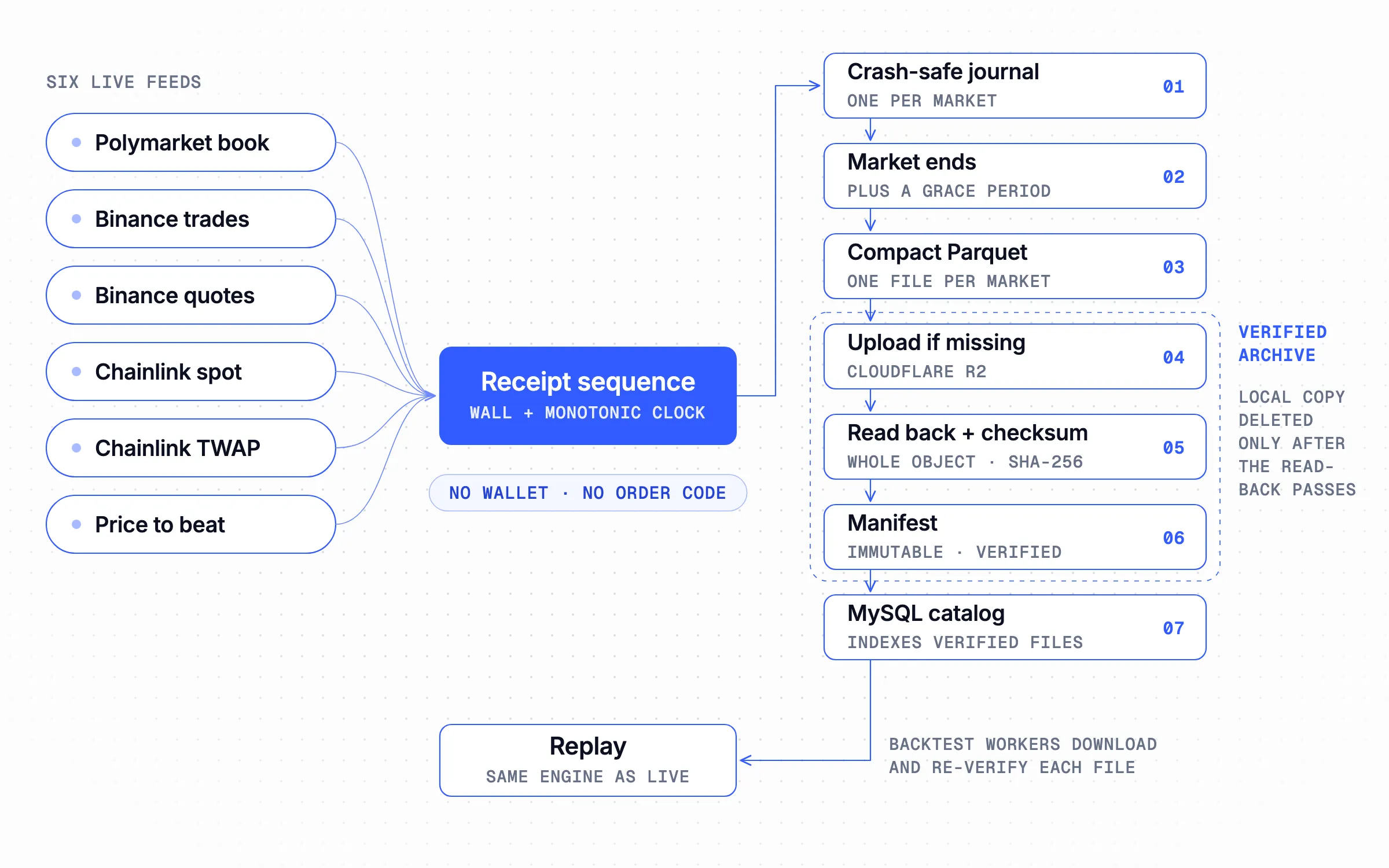
- Measurement at scale: a market-analytics tool reuses the engine's replay code; one run covered 10,000 markets and about 1.73 billion events.
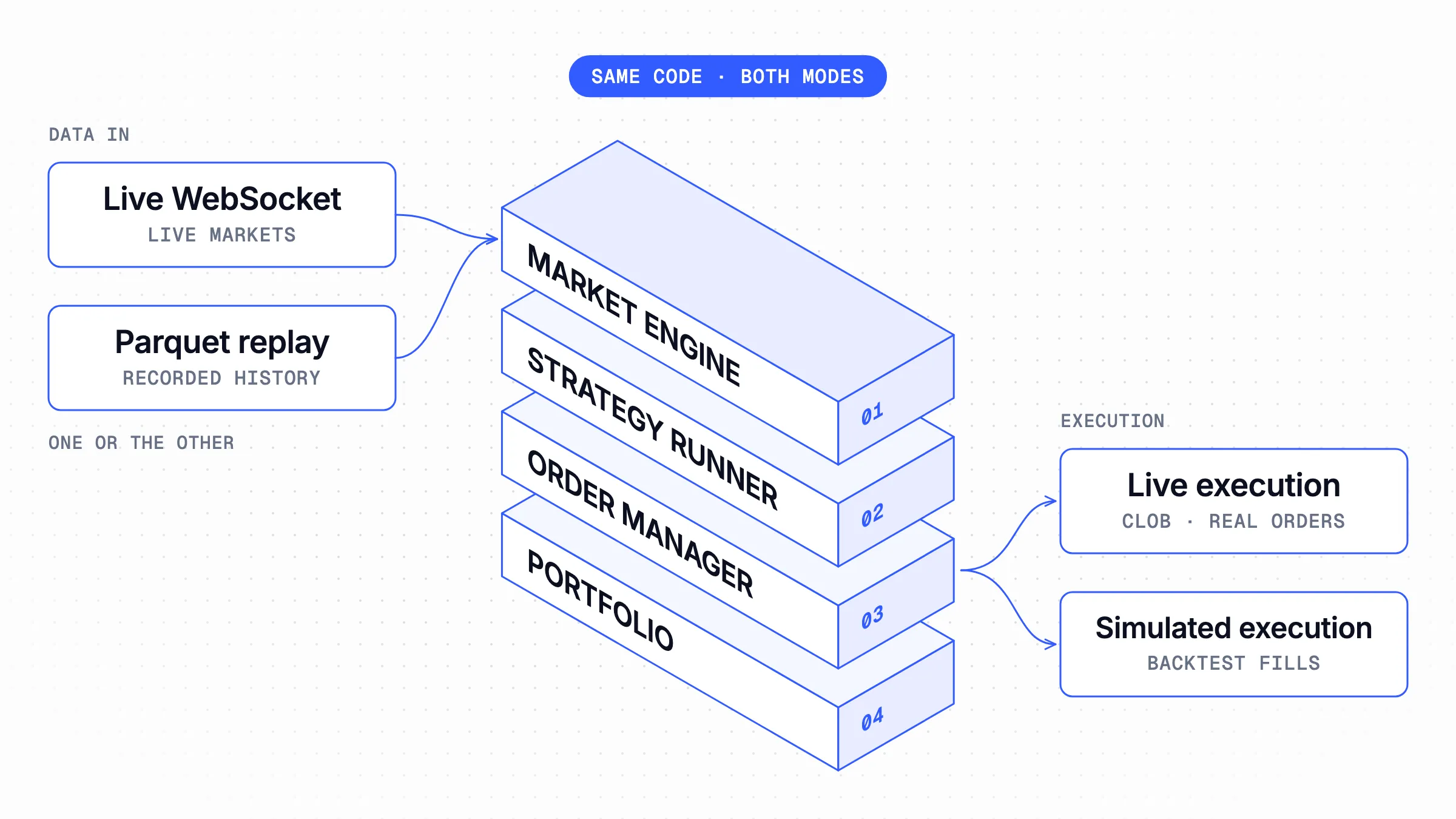
The engine stays the one place where trading logic runs. The research layer only feeds it strategies it can verify.